

When my daughter Maisa was a newborn I took her to graduate level counseling classes in a baby sling. She’d sleep peacefully nestled next to me while I learned about attachment theory and family systems, and I would sneak out to nurse her if she got restless.
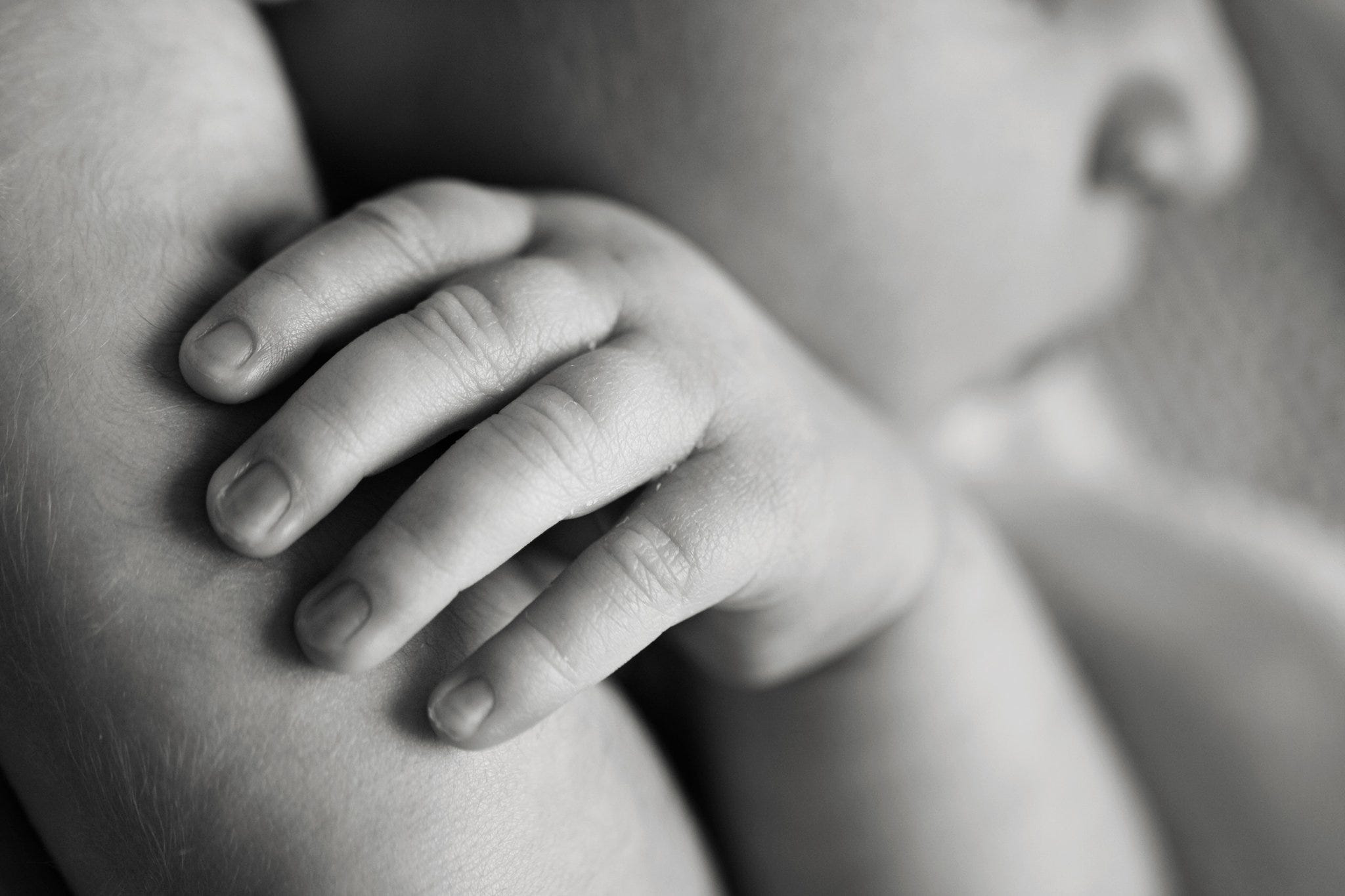
Fourteen years later she would die by suicide.
It turns out no amount of academic training, no checklist of warning signs, and no depth of parental love can single-handedly shield a child from environments and institutions that refuse to see them, refuse to look outside of rigid boxes, and repeatedly choose systemic self-preservation over humility, curiosity and collaboration. A parent’s fierce love can create a sanctuary at home, but it cannot neutralize the unsafe world they are expected to live in.
Maisa’s death forced me to question everything: the structures we live inside of, what we label as “help,” what we package as “prevention,” and the assumptions we make about those who experience terminal despair. I have lived on multiple sides of this equation—as a student of the discipline, an advocate, as a mother fighting for her child’s life, and now as a daily survivor of the deepest loss imaginable.
Every September, for Suicide Prevention Awareness Month, our feeds flood with familiar slogans and polished graphics: You matter. Reach out. Help is available. For those who spent years navigating the landscapes of purported care only to lose a child or loved one anyway, these messages do not feel reassuring. They feel hollow, tone-deaf, and performative.
For years, I bought into this narrative. I shared the graphics and urged people to reach out. I trusted the promise that help was there if people simply asked for it. Tried harder. Tried differently. But when the crisis actually arrives, many families quickly discover how broken these systems are: deflection, denials, endless intake packets, removal of autonomy and basic human rights, months-long waiting lists, lack of coordination, and revolving doors that are supposed to pass for real support.
In the aftermath, instead of an embrace or meaningful institutional accountability, many find silence, withdrawal, or quiet scrutiny. I encountered institutions entirely uninterested in examining their own failures, even as other families walked the exact same nightmare. Sitting in grief groups, I realized Maisa’s story and mine were not isolated anomalies. Group after group was filled with parents who had fought with everything they had, and were still left kissing an urn goodnight or visiting a cemetery every evening.
What if suicidal despair is not a private defect or individual pathology, but a mirror society refuses to look into?
When someone experiences pain so excruciating that it becomes terminal, they are signaling that something unlivable exists in their world. It could be chronic illness, trauma, poverty, abuse, racism, ableism, or structural violence. Yet our collective response is to pathologize the agony. We isolate the suffering person, label their despair as a personal malfunction, and demand they do a better job of enduring the brutal conditions rather than trying to eliminate or change those conditions.
We have confused survival skills with actual care and a collective responsibility to create livable conditions for people. When a young person begins to buckle under the weight of an unlivable environment, our institutions offer them worksheets on mindfulness, individual safety plans, breathing exercises, and prescriptions to numb the pain. All of this without scrutinizing the conditions the person is having to endure. We try to teach people how to regulate their nervous systems inside spaces and communities that are actively traumatizing them. We treat despair as an individual problem rather than legitimate communication and a rational response to an unbearable environment, placing the entire burden of fixing it onto the person who is already breaking.
There is an unspoken cruelty in asking someone to become resilient enough to survive conditions that should never have existed in the first place. Coping mechanisms and the ability to self regulate are important, but they are not a substitute for community support and safe environments. Regulating our breath does not stop the water from rising. What our children need is not better armor to withstand the world we built; they need us to build communities where they can finally set the armor down.
If someone cannot survive the weight of an unlivable environment, we have absolved ourselves of the outcome. We say they lost their battle, that they made a choice, or that their loved ones failed them. We reach for language that insulates us from our shared culpability, avoiding the reality that their death is an indictment of the shared world, environments and communities we have constructed. We will never truly address this crisis until we accept that these systems we live inside are a collective responsibility, and therefore, survival is not an individual chore.
We belong to each other. So when we blame our most sensitive souls for their inability to survive the systems we have created, we are refusing to look at ourselves.
Every time we reduce systemic harm to a chemical defect or a missed warning sign, we contribute to the crisis. Every time we tell a drowning person to simply breathe deeper while doing nothing to stop the rising water, we contribute to the crisis. Every time we substitute a hotline graphic for the agonizing work of self-reflection and community care, we contribute to the crisis. Every time we look away from systemic harm and call it an individual tragedy, we contribute to the crisis.
True prevention does not begin with an emergency phone call. It begins with sitting with our own unease, then dismantling the harms, the isolation, and the structural neglects that push people to despair in the first place. Until we build a culture where safety, dignity, and genuine community care are commonplace, our awareness campaigns will remain little more than performance designed to soothe and absolve our own discomfort with the fact that people in our communities currently live with this kind of despair.
Maisa deserved a world that didn’t just tell her to hold on, but gave her an ecosystem worth holding onto. Every child, every human deserves that. Real prevention is not teaching people how to survive unbearable systems; it is having the vulnerability, accountability and courage to build a world that actually lets them live.
Oh my, yes. Yes. Yes. This the the core of the problem. A society that askes our children to live in untenable ways. Our school system and current childhood is the antithesis of how we evolved to grow up and grow into ourselves in the world. Peter Gray has been talking about this for a long time. How our systems of schooling are counter to the developmental needs of children. How this leads to emotional pain, anxiety, depression, and yes to the rising rates of teen suicide. His recently released book, "Restoring Childhood: how to set kids free in the age of anxiety" talks about these issues directly.
I too, with a 2E kid, have sacrificed my career to fight for and protect him from a school system that inflicts so much trauma on kids. Again and again, I've fought the school district. Again and again I've had to move my kids to protect them from spirit crushing schools. Again and again, I've had to fill their needs without school help. Last year he had a major depression with suicidal ideation. Really all triggered by the psychological angst of trying to "succeed" with ADHD and dysgraphia in a school system that demands children be capable of things on the schools time frame and not the child's. Now at 16 y/o we are battling the school again. But really we know we'll get nothing from them and the system will not change. And the system is not healthy for them. So, end of this semester we'll pull him out from under the high school systems thumb. We'll home school and dual enroll in community college. We'll let it all move at his pace.
But so, so many kids are just crushed by this ridiculous, heinous, repessive system of american schooling. Yet, schools and teachers are considered sacrosanct in our culture. To critize them is often viewed as ranting at something holy.
Hope for children lies only in a massive revamp of childhood and education.
Once again, I am so sorry for your loss.
All peace and comfort to you and yours
Thank you 💖