

These truths are difficult to write about. They are even more difficult to live inside of. If you are reading this with curiosity, humility, and an open heart, I deeply thank you. Change begins with courageous conversation. It begins with radical honesty.
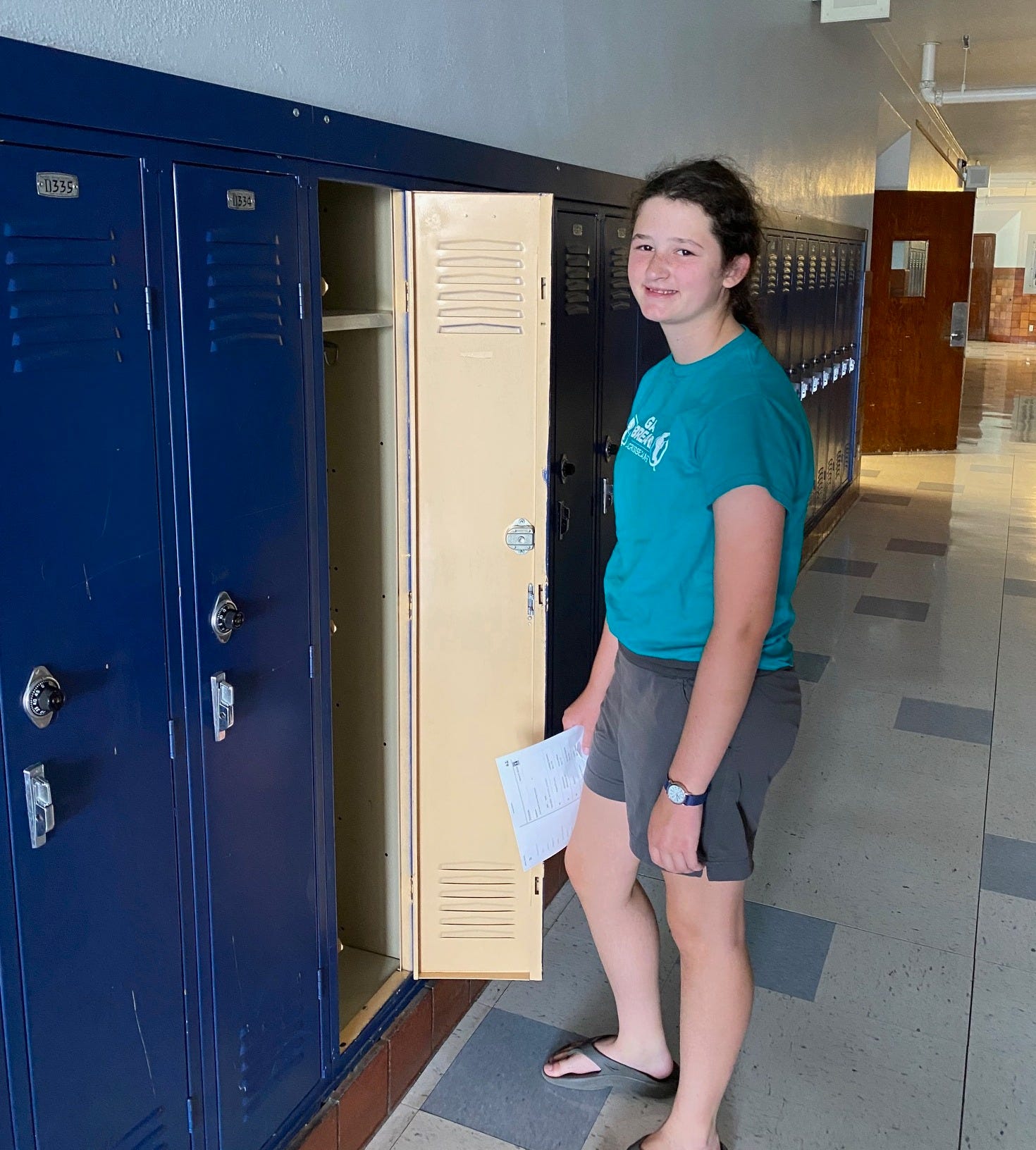
My daughter, Maisa, lived through her hands. She was constantly drawing, collecting treasures, creating all kinds of art, and leaving handwritten notes and handmade gifts for her family around the house. I used to tuck notes into her lunchbox in attempts to brighten her day, and after she died, I found a collection of them carefully saved in her room.
If the person closest to you died, what would you treasure? The memories, yes, but also the things they created, touched, and left during their time here on this Earth. Those creations become sacred artifacts. You hold onto every line, every word, every trace of their touch.
It has been 33 months since Maisa died. Yet the personal belongings from her locker at school were never returned to me. The last pieces of her handwriting, her artwork, her creations, her personal notes, and any other personal items that were in her school locker remain missing and unaccounted for.
When I asked for her things, the language from the school shifted subtly from “it was emptied” to “it was empty.” In that subtle change of language lies a massive refusal of accountability. Lockers that have collected and accumulated items throughout a semester do not empty themselves. Someone made the decision to clear it. Someone made the decision not to safeguard her belongings. Someone chose not to return those sacred traces of my daughter Maisa to her grieving and devastated mother. And in the wake of all of this, many someones have remained quiet over and over again to protect the system. To the school these items may be just papers or a random collection of school supplies, but to me, they are the last things my precious baby daughter touched here on this Earth - tangible proof that she existed. To keep these things from me feels cruel and completely unnecessary. In addition, these papers could hold important information about the last few days of her life.
While this was happening, a painful and violent contrast unfolded in those very halls. Other parents were invited to decorate surrounding lockers in a public act of unity and care. But my child’s space was treated like an inconvenience to be sanitized, and forgotten. The message was clear: her memory was useful as a backdrop for performative sympathy, but her actual life and remaining belongings were treated as disposable.
That disconnect did not exist in a vacuum; it landed directly on one of my surviving sons. While the school curated an environment of public grief for his peers, my son had to walk those halls and watch his sister erased in real time. He was left to carry the raw, heavy weight of her loss in a space and system that chose polished gestures over genuine support for the family actually living the nightmare every single day.
We trusted the adults in that building with our children’s well-being. But a community’s true values are not written on banners, shown in cookies on tables, or declared during awareness weeks. They are revealed in how we handle real tragedies, how we treat those left behind carrying life long grief, and how we deliver real community care in patterns of behavior over time.
Over and over, we have seen this stark divide between public empathy and private indifference. We have reached out countless times, using every avenue available to us, not out of blame or bitterness, but because I want to know what happened to my daughter’s final belongings. I want to know, and believe I have every right to know, what was happening during her last days of school. I want those final traces of her returned. I speak out because I care about protecting other children, and because no other family should ever have to endure this kind of devastation and then additional erasure and pain on top of it.
Again and again, we have been met with coldness, stonewalling, institutional failure, and individuals who choose personal comfort over basic humanity. Silence does not heal. Silence does not protect children or promote positive change: it only protects broken systems and preserves the status quo.
I am the keeper of my daughter’s memory and legacy. I am her voice. For nearly three years, our community has offered quiet sympathy while institutions have offered silence and stonewalling. Passive condolences do not protect families, nor do they hold systems accountable. My children and I do not need or want hollow gestures; we need a community willing to stand beside us and take meaningful action to change systems that continue to harm children.
Real care demands action. It requires asking the hard questions, refusing the comfort of silence, and holding these institutions to a standard of genuine care, empathy, and humanity. My daughter Maisa deserved that. My sons deserve that. All children deserve that. And our community should demand nothing less.
How you can help:
Forward this essay to parents, educators, and community members in Idaho who care about student well-being and institutional accountability.
Write or call local school board members and administration to ask what protocols exist for safeguarding the personal belongings and records of deceased students. Ask also how grieving siblings are supported long term.
Ask your kids about what they notice in their school hallways to determine whether public gestures match how grieving classmates and siblings are actually treated. Call out any inconsistencies immediately and repeatedly.
Challenge schools and local organizations when public awareness events are hosted without specific, ongoing support for affected families.
Say their names. Keep Maisa’s name and the names of other children who have died alive. They may not be here physically, but they are not gone. Refuse to let their presence be quietly erased from our community.
To the educators and staff within those walls who knew Maisa, who know my sons, and who have felt the wrongness of how this was handled and how our family has been treated: your voices still matter. Courage is not the absence of fear; it is choosing humanity over institutional comfort.
Maisa should be decorating her locker to start her junior year. I am still waiting for her belongings from 8th grade to be returned to me.
I have always said that I am the keeper of Ruby’s memories, and her only voice. 💖 I also used to put notes in lunches 💖 a tiny bit of love for a struggling kid to find in the middle of a hard day. 💖
This just punches me in the gut. What you are going through as we know is the worst already, but to make it harder? I am so so sorry. Xoxo