

We teach children to be kind. What exactly are we teaching them?
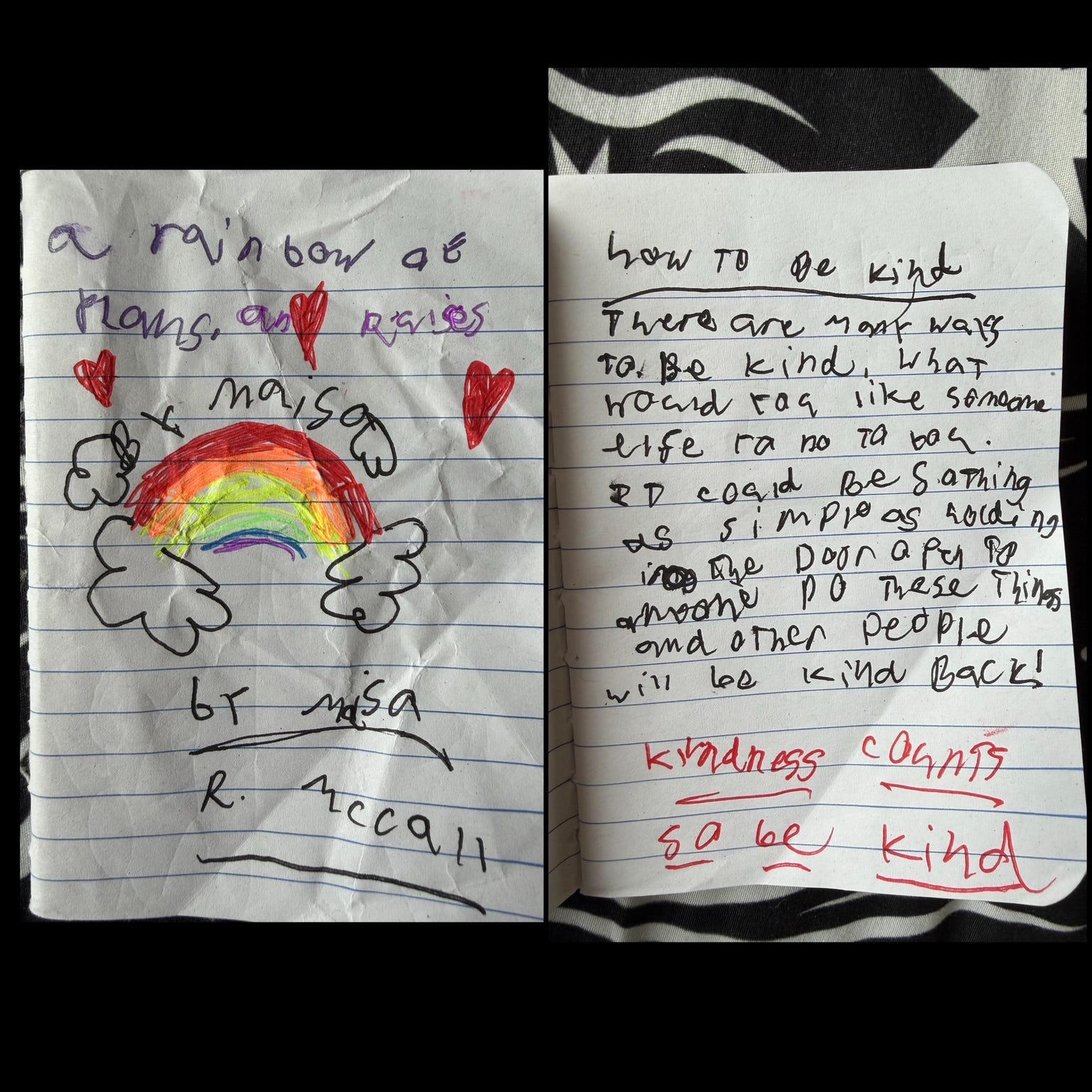
In my daughter Maisa’s room, a piece of her school writing still reads: “Be kind and other people will be kind back.” Tragically, her lived experience proved that the world does not always keep its promise.
Recently, her younger brother reminded me of a story from the pandemic. When the school shut off the water fountains, Maisa didn’t just worry about herself; she worried about everyone. Every morning, she would stop on the way out the door at our garage refrigerator to fill her school backpack with heavy, sealed water bottles.
She walked to school carrying extra weight on her shoulders, so she could hand out hydration to anyone in need. For Maisa, kindness wasn’t a performance. It was pure, instinctual, and genuine. She had a heart of gold, and easing other people’s discomfort made her soul happy.
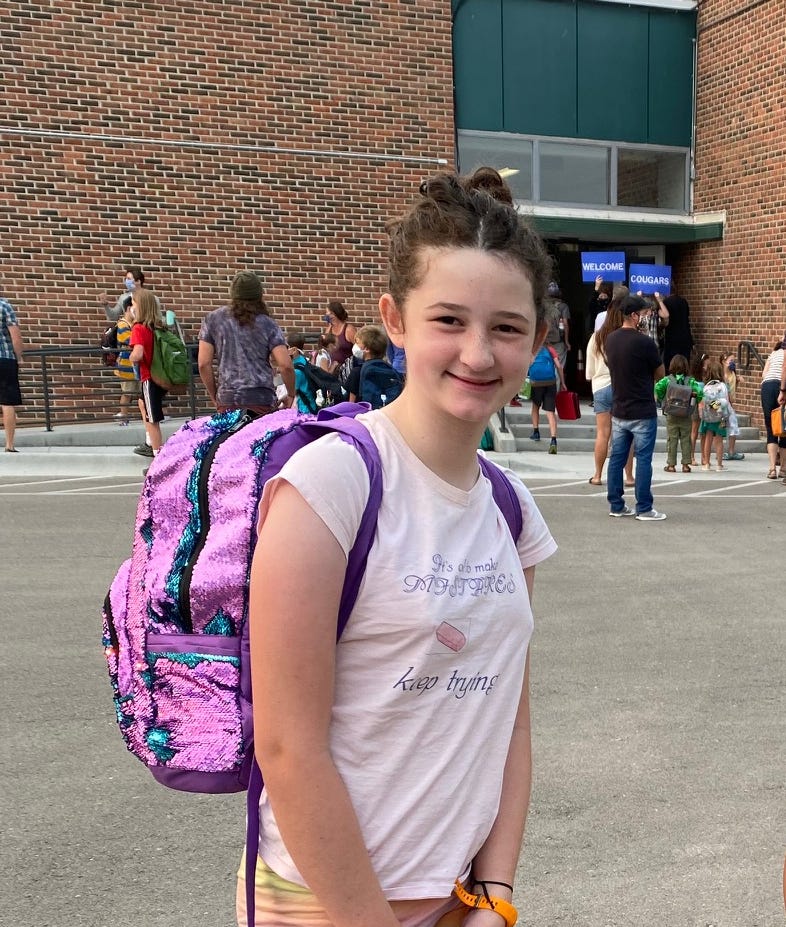
But within a week, the weight got even heavier.
Instead of gratitude, she met entitlement. Some of her classmates began treating her like a mobile vending machine. They stopped bringing their own water from home entirely, choosing instead to outsource their basic preparation to a little girl with a big heart. They expected her to carry the burden for them.
We teach kids to give. What do we teach them about over functioning? About the self abandonment that can happen in the process of giving? Do we teach them that true kindness requires a baseline of self-preservation? These are lessons that sensitive and hyper empathetic children like Maisa desperately need.
And what about the children who quickly learn to exploit those with big hearts? Where is the lesson in accountability for them?
There were so many afternoons throughout the years that Maisa came home from school with tears in her eyes, carrying a broken heart and spirit alongside that heavy backpack. And there were so many times I reached out to educators, school counselors and administrators, asking for support and intervention around her social struggles: the rejection, the bullying, the repeated and systemic isolation. Again and again, my concerns were minimized or treated as typical childhood conflict. Meanwhile, Maisa kept carrying the weight. The damage to her self-esteem and confidence didn't lessen; it slowly calcified inside her heart, mind, and body.
Teaching kindness without adjusting lessons for different neurotypes may inadvertently teach the kindest kids self-sacrifice and self-abandonment. Many children like Maisa arrive kind, and with an acute sense of justice. It is innate. When we teach sensitive children that their job is to keep giving, regardless of how they’re treated, we don’t make them more compassionate. We make them vulnerable.
We are handing our most sensitive children a heavy pack, sending them into an unaccountable world, and priming them to be targets.
The Cost of Missed Identification and Misattunement
For neurodivergent children, the abstract instruction to “be kind” can become a dangerous trap. Many autistic children experience empathy differently than stereotypes might suggest. Some notice suffering with remarkable intensity and respond with deep generosity. Others express care in ways that may not look conventional. What we often share is a profound commitment to authenticity. The problem isn’t a social deficit; the problem is systemic incoherence.
Neuronormative social dynamics are full of contradictions: there is a constant, confusing disconnect between what people say and what they actually do. A highly attuned child can feel that incoherence instantly, but when the overarching rule they are taught is “be kind and the world will be kind to you,” they learn to question or override their own intuition to comply with the stated rule. They struggle to navigate a world where people say one thing but mean another, and where genuine kindness is quietly met with calculated exploitation. Combine this hypersensitivity to social incongruence with a natural desire to fit in, and you have a dangerous combination.
This is precisely why early identification and tailored support matter so deeply.
When we miss or delay identifying and supporting a child’s unique neurology, we leave them completely unarmed in a highly complex and sometimes dangerous social ecosystem. Early identification isn’t about labeling or diagnosing children; it is about seeing them clearly. It is about providing a correct roadmap for both the child and the adults around them. Without that roadmap, a parent’s pleas for help are often dismissed as overprotectiveness, and the child’s profound social exhaustion or school trauma is shrugged off by schools as typical “playground struggles.” I tried for years to get the right kind of support for Maisa. Well before she started overtly displaying any signs of suffering.
When we refuse to accurately see a child’s specific neurological profile early on, we miss the window to teach them the precise, explicit social tools they need to thrive. We don’t protect them from the world; instead, we force them to keep carrying an ever-increasing emotional weight until their self-esteem, confidence, and spirit completely fracture. Early identification is how we can step in before the damage takes root, giving our most trusting children the specific skills they need to protect their brilliant minds and golden hearts. We wouldn’t wait to identify and support diabetes, heart differences, or early cancer markers, so why so do we ignore signs that a child needs help and support with his or her neurotype?
Potential Solutions Through A Neuro-Affirming Lens
Traditional social-emotional curriculums often focus heavily on surface-level social pleasantries and compliance. No child should be taught to override what they feel. For an autistic child, a sensitive child, or any child, we should validate their intuition and help them act on the social contradictions they are already feeling.
Here are a few things a protective, neuro-inclusive framework might include, recognizing that different children require entirely different instructions depending on how they process the world:
Teaching Discernment: We can explicitly tell children: “If someone’s actions don’t match their words, you do not have to give them your energy.” True compassion includes compassion for oneself, which means understanding and honoring our own internal limits.
Providing Literal Scripts: Highly literal or empathetic kids benefit from concrete, practical phrases to navigate entitlement. We can teach them it is okay to say: “I was glad I could help yesterday, but today you need to bring your own.”
Reframing “Peer Conflict” in Schools: Educational institutions can look closer at emotional exploitation or targeted isolation, rather than dismissing it as a normal playground conflict. Pushing through internal boundaries to fit a rigid social mold leads directly to deep exhaustion, school trauma and autistic burnout - which is a known, significant contributing factor to suicide. Just because a conflict doesn't look loud or explosive on the surface doesn't mean the internal distress isn't enormous. So many sensitive kids won't act out; they will quietly internalize the pain until they break.
Disrupting the Culture of Entitlement: We should also look at the other side of the dynamic. Children who are consistently on the receiving end of someone else’s labor or kindness need to be taught to ask themselves: “What am I contributing in return?”
In Maisa’s room, those words still sit on the page. Be kind and other people will be kind back. I wish the world had kept that promise. Since it didn’t, perhaps our responsibility is now something different.
Teaching “be kind” is incomplete. Maybe the lesson isn’t simply “be kind.” Instead maybe we can teach kids like Maisa: be kind and trust yourself. Be kind and discern. Notice when words and actions don’t match. Be kind and protect your own heart with the same tenderness you offer everyone else’s.
Because the children who carry the most love are often the ones carrying the most weight. They shouldn’t have to do it alone.
It’s heartbreaking to think of sweet Maisa taking care of others and then being treated so poorly. Her sweet spirit is such gift to everyone but as you said, not everyone will reciprocate. I know it’s still difficult for me as an older person to have any real understanding why anyone would do horrible things. There isn’t a cell in my body that understands that. How awful for you to advocate for help and be refused.
Your guidance in how to teach children discernment is valuable. The hard part is to reconcile how other people can be unkind when you have no understanding of the impulse to be anything but kind. Her love for others will never be forgotten. Thank you Samia for your work and love.
Beautiful, Samia. I also had a kind child, who went on to take his life at 30. I wish I had known more about neurodiversity back then.
What a beautiful girl Maisa was. I know she will be living on in the hearts of all those who appreciated her as she deserved. And most of all in her mum’s heart ❤️❤️❤️